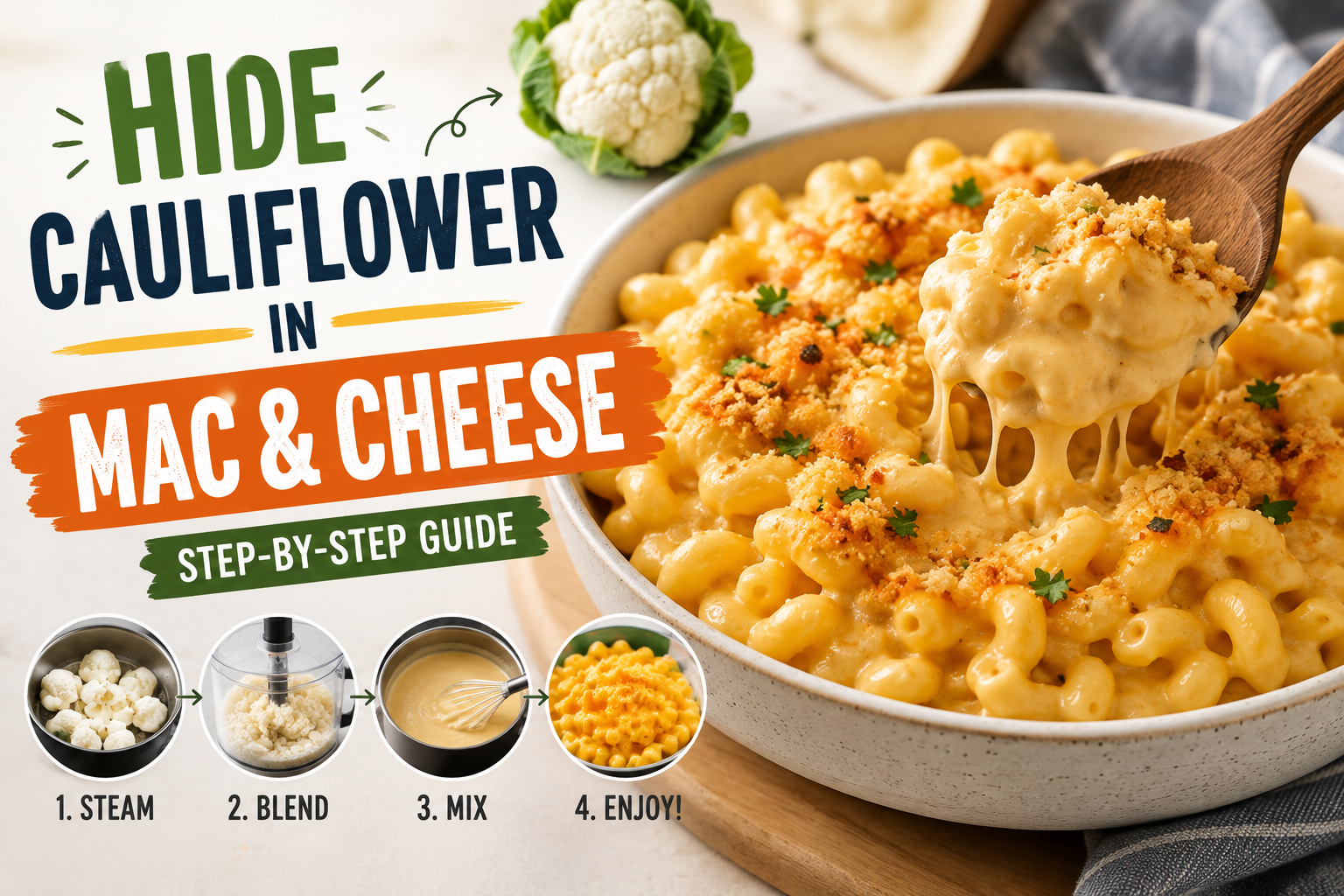
“…blend it into the one food most kids will eat without complaint — mac and cheese. [
For more hidden veggie ideas, see our complete guide to recipes kids actually ask for seconds.]”
If you have ever tried to convince a five-year-old that cauliflower is delicious, you already know how that conversation ends. But here is what actually works: stop trying to sell the cauliflower. Instead, blend it into the one food most kids will eat without complaint — mac and cheese.
This is not about tricking your child. This is about making vegetables taste better by pairing them with something they already love. The cauliflower adds creaminess, a subtle sweetness, and a nutritional boost without changing the flavor or texture of classic mac and cheese. Done right, kids will ask for seconds and never realize they just ate an entire head of cauliflower.
This guide walks you through the exact process, including the mistakes that make hidden cauliflower obvious and the small tweaks that make it completely invisible.
Why Cauliflower Works So Well in Mac and Cheese
Cauliflower is mild, almost neutral in flavor when cooked properly. Unlike broccoli or Brussels sprouts, it does not have a strong taste that fights with cheese. When steamed until very soft and blended smooth, cauliflower takes on a creamy, slightly sweet quality that actually improves cheese sauce.
The texture is key here. Raw or undercooked cauliflower has a distinct crunch and a cabbage-like flavor that kids will notice immediately. But when you steam it until a fork slides through effortlessly and then blend it completely smooth, it disappears into the sauce. No chunks. No florets. No giveaway texture. Just a thicker, richer cheese sauce that clings to pasta better than the regular version.
Nutritionally, one head of cauliflower adds fiber, vitamin C, vitamin K, and folate without adding much in the way of calories or carbs. For parents trying to sneak vegetables into meals, cauliflower mac and cheese is one of the easiest wins.
The Ingredients You Need
This recipe makes enough for four to six servings. You can double it easily and freeze half for later.
- 1 medium head of cauliflower (about 4 cups of florets)
- 1 pound of pasta (elbow macaroni, shells, or cavatappi work best)
- 3 tablespoons butter
- 3 tablespoons all-purpose flour
- 2 cups whole milk (2% works, but whole milk makes it creamier)
- 2 cups shredded sharp cheddar cheese (sharp is important — the strong flavor covers the cauliflower)
- 1/2 cup shredded mozzarella (for extra creaminess)
- 1/2 teaspoon garlic powder
- 1/2 teaspoon onion powder
- 1/4 teaspoon mustard powder (optional, but it deepens the cheese flavor)
- Salt and pepper to taste
Step 1: Steam the Cauliflower Until Very Soft
Cut the cauliflower into florets. Do not worry about making them perfectly uniform — you are going to blend them anyway. Place the florets in a steamer basket over boiling water, cover, and steam for 12 to 15 minutes. You want the cauliflower so soft that a fork slides through with zero resistance.
Undercooked cauliflower will not blend smooth. You will end up with tiny white specks in your cheese sauce, and kids will notice. If you are unsure whether it is done, err on the side of overcooking. Mushy cauliflower blends perfectly. Firm cauliflower ruins the whole plan.
Pro tip: If you do not have a steamer basket, you can also boil the cauliflower directly in water or microwave it in a covered bowl with a splash of water for 8 to 10 minutes. The goal is the same — very soft cauliflower.
Step 2: Blend the Cauliflower Completely Smooth
Once the cauliflower is cooked, transfer it to a blender or use an immersion blender directly in the pot. Add about 1/4 cup of the milk from your ingredient list. Blend on high until the cauliflower is completely smooth — no lumps, no chunks, no visible pieces. It should look like a thick white puree, similar to mashed potatoes but smoother.
This step is non-negotiable. If the cauliflower is not blended smooth, your child will find the pieces. A high-powered blender works best, but even a cheap immersion blender can get the job done if you blend long enough.
Pro tip: Taste the cauliflower puree at this stage. It should be very mild and slightly sweet. If it tastes bitter or sulfur-like, your cauliflower was not fresh or was overcooked in a way that brought out those flavors. Start over with fresh cauliflower.
Step 3: Cook the Pasta
Bring a large pot of salted water to a boil and cook your pasta according to the package directions. Aim for al dente — pasta that still has a slight bite to it. It will continue to soften slightly when you mix it with the hot cheese sauce.
Drain the pasta but do not rinse it. The starch on the surface of the pasta helps the cheese sauce cling better.
Step 4: Make the Cheese Sauce
In a large saucepan, melt the butter over medium heat. Once it is fully melted and bubbling, add the flour and whisk constantly for about one minute. This is called a roux, and it thickens the cheese sauce. The mixture will look like wet sand at first, then it will start to smooth out.
Slowly pour in the milk, whisking constantly to avoid lumps. Keep whisking as the mixture heats up. It will start thin, then gradually thicken into a creamy white sauce. This takes about 4 to 5 minutes. You want it thick enough to coat the back of a spoon.
Once the sauce has thickened, reduce the heat to low and add the blended cauliflower puree. Stir until fully combined. The sauce will turn a pale cream color.
Step 5: Add the Cheese
Remove the saucepan from the heat. Add the shredded cheddar and mozzarella, along with the garlic powder, onion powder, and mustard powder if using. Stir until the cheese is completely melted and the sauce is smooth and glossy.
Taste the sauce now. It should taste like rich, flavorful mac and cheese — not like cauliflower. If the cheese flavor is not strong enough, add more cheddar. The sharper the cheddar, the better it masks the vegetable.
Season with salt and pepper to taste. Remember that kids tend to prefer food on the less-salty side, so go easy unless you know your child likes bold flavors.
Step 6: Combine Pasta and Sauce
Add the cooked pasta to the cheese sauce and stir until every piece is coated. The cauliflower puree makes the sauce thicker than usual, so it clings to the pasta beautifully. If the sauce seems too thick, add a splash of milk and stir until you reach your preferred consistency.
Serve immediately while it is hot and creamy. Kids are more likely to eat it when it looks and smells exactly like the mac and cheese they are used to.
Common Mistakes That Give Away the Cauliflower
Mistake 1: Not blending the cauliflower smooth enough. Even tiny specks of white will make kids suspicious. Blend longer than you think you need to.
Mistake 2: Using mild cheddar instead of sharp. Mild cheddar has a weak flavor that lets the cauliflower come through. Sharp or extra-sharp cheddar dominates the sauce and covers any vegetable taste.
Mistake 3: Skipping the seasonings. Garlic powder, onion powder, and mustard powder add depth and make the sauce taste more complex. Without them, the cauliflower flavor becomes more noticeable.
Mistake 4: Serving it lukewarm. Cold or lukewarm mac and cheese changes the texture and makes the cauliflower more detectable. Serve it hot for the best results.
How to Store and Reheat Leftovers
Store leftovers in an airtight container in the refrigerator for up to four days. When you reheat it, add a splash of milk and stir well. The sauce tends to thicken as it cools, so the extra liquid brings it back to the right consistency.
You can also freeze this mac and cheese for up to three months. Let it cool completely, then transfer to freezer-safe containers. Thaw in the refrigerator overnight before reheating.
Variations That Work
Baked version: Pour the mac and cheese into a greased baking dish, top with extra shredded cheese and breadcrumbs, and bake at 350°F for 20 minutes until the top is golden and bubbly.
Add protein: Stir in cooked chicken, bacon bits, or ground turkey for a more filling meal.
Mix in other hidden veggies: Once you master cauliflower, you can also blend in cooked carrots or butternut squash. Both have a natural sweetness that works well with cheese.
When to Tell Your Kids About the Cauliflower
Some parents prefer to tell their kids right away. Others wait until the meal is over. There is no single right answer here.
If your child has a history of refusing food based on what they think is in it, wait until they have eaten and enjoyed it a few times. Then frame it as a fun surprise rather than a trick. “Remember that mac and cheese you love? It actually has cauliflower in it. Pretty cool, right?”
Many kids will shrug and keep eating it because they already know it tastes good. The fear of vegetables often disappears when they realize they have been eating them all along without noticing.
Why This Recipe Is Worth the Effort
Yes, this takes a few extra steps compared to boxed mac and cheese. But the payoff is real. You get a meal your child will actually eat, packed with vegetables they would otherwise refuse. Over time, as they get used to the flavors of cauliflower in a safe, familiar context, many kids become more willing to try vegetables in other forms.
And even if that never happens, you still have a reliable dinner option that gets vegetables into your child without a fight. That alone is worth the fifteen extra minutes.
Make a batch this week. See what happens. If your kid asks for seconds, you will know you have found a keeper.